

Till We Have Faces
Summary
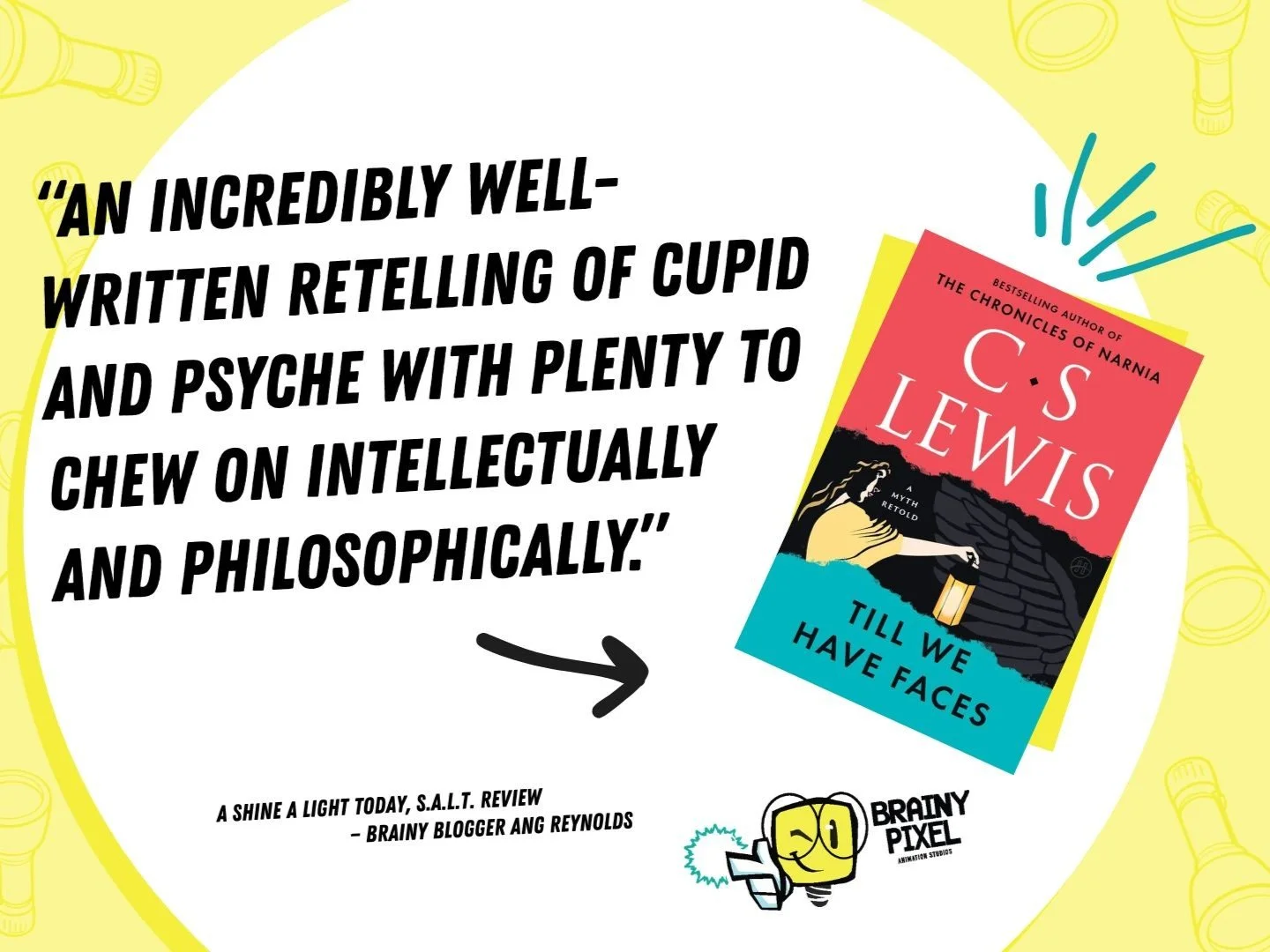
Till We Have Faces is C.S. Lewis’ final novel, written in 1956. An intriguing retelling of the myth of Cupid and Psyche from Apuleius’ second century book Metamorphose, Till We Have Faces follows the embittered older sister of Psyche as she writes out her complaints against the gods.
Assessment
Till We Have Faces is C.S. Lewis’ decades-long passion project. Starting from his frustration with some inconsistencies in the original tale, Lewis first developed the idea during college, only completing it with his wife, Joy Davidson, much later. The story follows Orual, the eldest sister of Istra — also known as Psyche, — as she establishes her side of the story as a complaint against the gods.
In terms of messaging, Lewis seems to be using pagan religions to muse on mortal will and emotions versus divine will and emotions. The book is in no way promoting these pagan religions, but is more using them as a tool for exploring the nature of man versus the nature of God and what happens when those two natures interact. It also features a character who is actively wrestling with who to blame for the events in her life; much like how people — sometimes including Christians — wrestle with how much God is to blame for the events in their own lives.
The story is relatively clean, although there are mentions of adult themes such as war and sex. There is also some violence, both against animals (sacrifice) and humans. With these factors and given the context and complexity, this story is one that is better suited for an adult or older teen audience.
Light-o-Meter
Overall — 5 out of 7 Little Lights
Story: 5 out of 7 Little Lights
Prose: 6 out of 7 Little Lights
Quality: 5 out of 7 Little Lights
Theological Message: 4 out of 7 Little Lights (purely because it was pretty muddled)
Age Appropriateness — Appropriate for an audience of adults and older teens.
Talk
This is probably one of the trickier Lewis stories for me to review. Not as bad as That Hideous Strength, but definitely not as easy as Perelandra.
Overall, I really enjoyed this novel (even if I should’ve refamiliarized myself with the original myth beforehand…). I thought Lewis’ take was incredibly well-done, particularly when it came to the character motivations. I don’t know that I loved Orual as a person, but as a main character and — in some ways — as an antagonist, I thought she was presented with incredible depth and nuance. Definitely a character I would love to given an in-depth study.
That said, I do think I need to read this one again when I’m older. C.S. Lewis is pretty good at both turning a phrase and diving deep theologically into just about any piece of fiction he creates. However, I also feel like I missed the story’s primary message — and I say primary because there were like four messages and philosophies that I did see, but I suspect there might be an overarching one that I just didn’t quite catch. The messages I did see were really good; how man wrestles with God’s nature and decisions, who is to blame when things go wrong, the tension between believers and nonbelievers, and the question of how much leg do we mortals have to stand on in the court of the divine.
Like a lot of his later works, I did find this novel a little meander-y. It seemed to take an extra length of time (or two) for Lewis to make the point he was trying to make; but this story was much more cohesive and focused than That Hideous Strength. I think the strength of this story is definitely in how well-developed the characters are — not just Orual, but also Istra/Psyche and others — and in the various nuances of their interactions.
This review is for this specific product and this product alone. In no way, shape, or form is this review meant to be an endorsement of the private lives, individual choices, lifestyles, or behaviors of those company(ies), publisher(s), creator(s), producer(s), author(s), artist(s), etc. associated with this product. It is God's sole providence alone to judge, and we make no claim to this right. With our reviews, we're simply looking at the value and merits of this specific product alone through the content and perspective of a Christian worldview. We pray you find it helpful and useful.